
From Ghana to Global Engineering: The Remarkable Career of Professor Emmanuel Kobla Glakpe
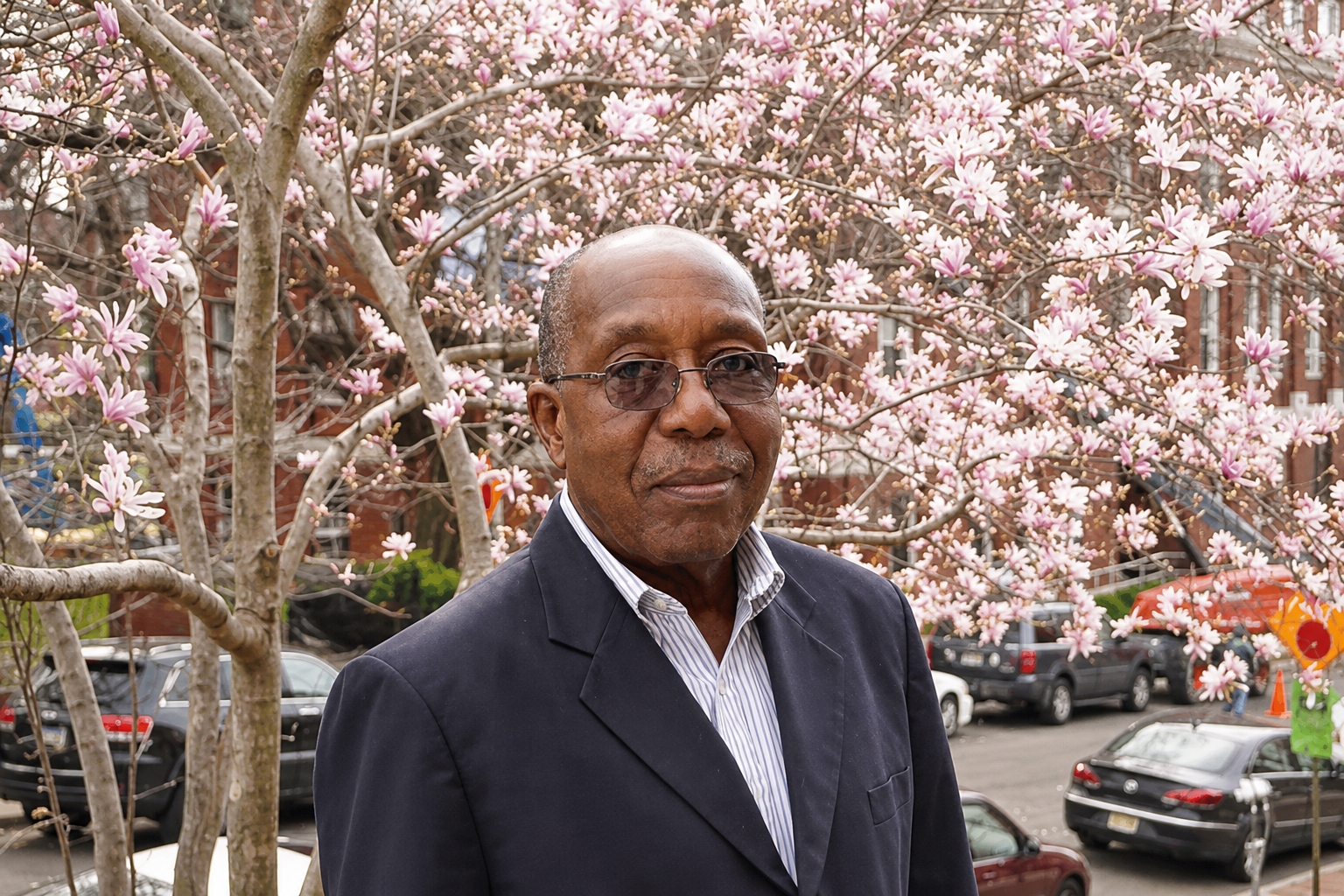
Professor Emmanuel Kobla Glakpe has built a distinguished career at the intersection of mechanical engineering, energy research, computational methods and engineering education, establishing himself as a respected academic at Howard University in Washington, D.C.
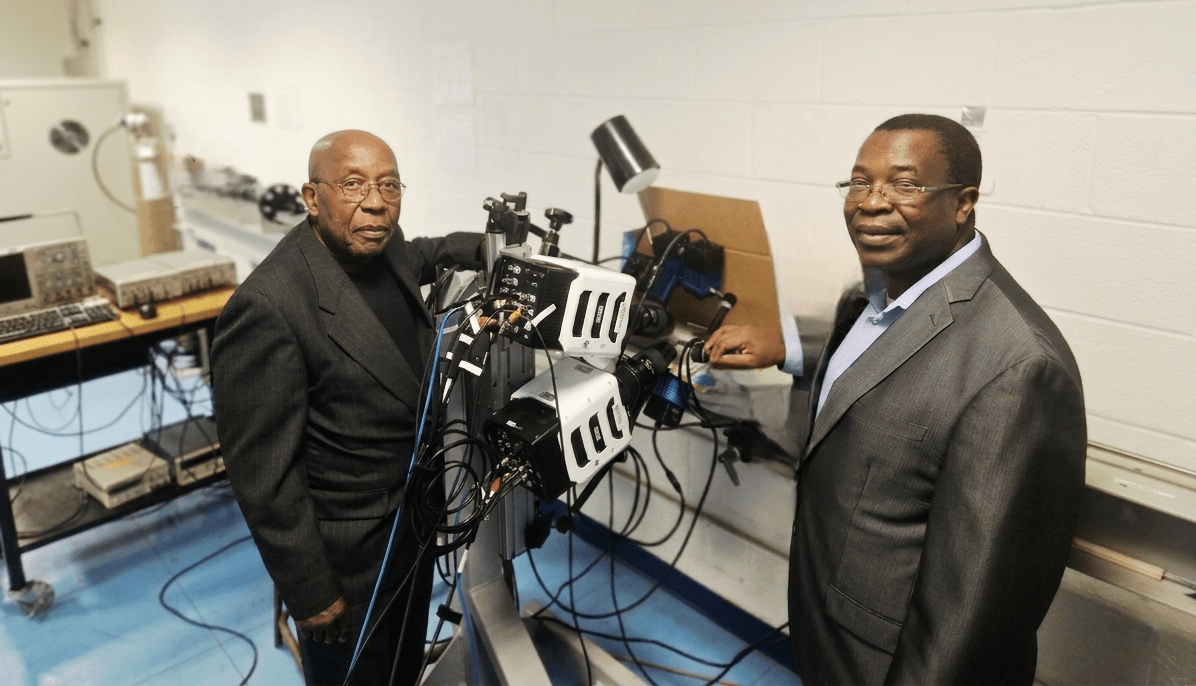
Currently a Professor of Mechanical Engineering in Howard University's College of Engineering and Architecture, Prof. Glakpe has spent decades combining teaching, research, professional service and student mentorship.
An academic journey spanning Ghana, Stanford and Arizona
Prof. Glakpe's academic journey began in Ghana, where he earned a Bachelor of Science in Mechanical Engineering from the University of Science and Technology in 1973. The institution is now known as Kwame Nkrumah University of Science and Technology (KNUST).
He subsequently earned a Master of Science in Mechanical Engineering from Stanford University in 1976, before completing a Ph.D. in Nuclear Engineering at the University of Arizona in 1980.
His academic background has therefore brought together mechanical engineering, nuclear engineering, energy systems and advanced computational methods.
A career dedicated to engineering education
At Howard University, Glakpe teaches across the fluid and thermal sciences, with courses spanning areas such as thermodynamics, heat transfer, fluid mechanics, energy engineering, jet propulsion and engineering design. His teaching also extends to graduate-level advanced thermodynamics and heat transfer.
His commitment to education has received institutional recognition. Howard University records show that he received the Amoco Foundation Award for Teaching Excellence twice, while the University's teaching awards records list him as an Outstanding Teacher of the Year in 1996.
His influence also extends beyond the classroom. Howard University has highlighted his mentorship of students who went on to pursue advanced degrees at institutions including Stanford, MIT, the University of Maryland, Georgia Tech and the University of Illinois.
Research focused on energy and advanced engineering
Prof. Glakpe's research spans several areas of mechanical and energy engineering.
Howard University identifies his research specialties as convective heat transfer, computational fluid dynamics, renewable and non-renewable energy applications, efficient energy utilisation, and thermal state of charge in solar heat receivers.
His academic work has also explored engineering education and the use of computational tools in teaching complex thermodynamic concepts. In a 2025 paper presented through the American Society for Engineering Education, Glakpe and his co-author examined the use of MATLAB for nonlinear thermodynamics analysis, highlighting applications in both engineering education and the optimisation of energy systems.
Recognised as an ASME Fellow
One of the significant milestones in Glakpe's professional career came in 2018, when he was elected a Fellow of the American Society of Mechanical Engineers (ASME).
Howard University's College of Engineering and Architecture said the recognition reflected his contributions to engineering education and research. The university also noted his work in computational methods for convective heat transfer and research involving thermal-state-of-charge in space solar receiver systems.
He is also a registered professional engineer in the District of Columbia and previously served as Associate Dean of Howard University's Graduate School from 2002 to 2006.
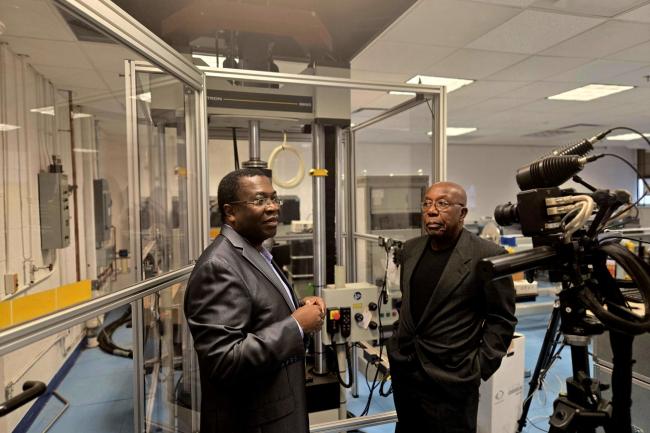
Contributing to the next generation of nuclear engineers
Glakpe's work continues to extend into advanced manufacturing and nuclear engineering.
In May 2026, Howard University announced that Glakpe and fellow mechanical engineering professor Gbadebo Owolabi had received a $1.4 million allocation from a U.S. Department of Energy National Nuclear Security Administration-funded consortium focused on advanced manufacturing of alloys for extreme conditions.
The wider consortium involves Howard University, Texas Southern University, Texas A&M University, Los Alamos National Laboratory and Idaho National Laboratory. The project focuses on advanced manufacturing technologies, including 3D printing, artificial intelligence and advanced robotics, with research centred on high performance tungsten alloys for nuclear applications.
At Howard, Glakpe serves as co-principal investigator on the project, which also aims to expand students' access to research, internships and mentorship opportunities in nuclear science and engineering.
Beyond the laboratory
For Glakpe, engineering has extended beyond research and university classrooms.
Howard University has documented his involvement in outreach programmes for young people, including mentoring students in Maryland and speaking to primary and secondary school students about engineering careers and the role of engineers in society. He has also participated in international engineering-education initiatives and served as a visiting faculty member at the University of Johannesburg through a Carnegie Foundation fellowship.
His professional interests have similarly remained international. The American Society for Engineering Education describes his work as including collaboration with colleagues in Africa, Europe and China on engineering education.
A legacy built on knowledge, research and mentorship
Professor Emmanuel Kobla Glakpe's career represents a long-term commitment to using engineering not only as a technical discipline but also as a vehicle for education and human development.
From his undergraduate education in Ghana to advanced degrees at Stanford and the University of Arizona, and from decades of teaching at Howard University to research in energy, computational fluid dynamics and advanced nuclear materials, his career reflects the global reach of engineering education.
His continued involvement in cutting-edge research in 2026 also demonstrates that his contribution is far from confined to the classroom. Through research, teaching and mentorship, Prof. Glakpe continues to help prepare engineers for some of the most complex energy and technological challenges of the future.